
 微博
微博 微信
微信
医院简介
医院简介
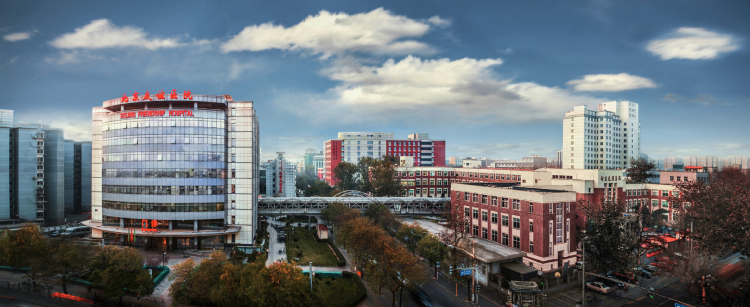
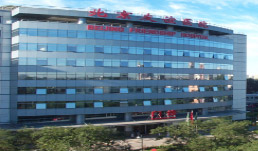
首都医科大学附属北京友谊医院始建于1952年,原名为北京苏联红十字医院,是新中国成立后,由党和政府建立的第一所大型综合性医院。建院初期,毛泽东、周恩来、刘少奇、朱德等老一辈革命家为医院亲笔题词。毛泽东主席题词“减少人民的疾病,提高人民的健康水平”。1957年3月,苏联政府将医院正式移交我国政府,周恩来总理来院参加了移交仪式。1970年,周总理亲自命名为“北京友谊医院”。
因国而生,因城而长,因人而重,因时而新。经过70余年的发展,首都医科大学附属北京友谊医院已发展为集医疗、教学、科研、预防为一体的北京市属三级甲等综合医院,是消化系统疾病国家临床医学研究中心和消化健康全国重点实验室依托单位,国家中西医协同“旗舰”医院试点单位,首都医科大学第二临床医学院。进入新时代,医院顺应首都发展变化,立足北京“四个中心”功能定位,落实北京城市总体规划,服务非首都功能疏解,形成了西城院区、通州院区、顺义院区和城市副中心行政办公区门诊部多院区新发展格局,为医院高质量发展奠定基础。
医院现有职工6300余人,其中中国工程院院士1人,北京学者3人,研究生导师256人,高级专业技术人员919人,国家级和北京市级专业委员会主委、副主委及核心期刊主编、副主编95人。目前三院区编制床位3306张。2025年年门诊总量近450万人次,出院患者15万人次。医院是北京市首批基本医疗保险A类定点医疗机构,已实现门诊、住院异地医保持卡结算服务,也是全国最早承担干部保健及外宾医疗任务的医院之一。
医院综合优势明显,专科特色突出,共有临床医技科室及平台科室50个。消化和泌尿系统疾病诊治,肝、肾移植,热带病和寄生虫诊治、中西医结合以及临床影像诊断和介入治疗等是医院的专业特色。2018年12月,医院成为首批全国建立现代医院管理制度试点单位,逐步形成了具有友谊特色、权责清晰、管理科学、治理完善、运行高效、监督有力的现代医院管理制度体系。
近年来,医院的医学科技创新能力显著提升,学科架构日臻完善,支撑平台不断强化,综合优势进一步凸显。拥有北京热带医学研究所、北京市临床医学研究所、北京市临床药学研究所、北京市中西医结合研究所、北京市卫生健康委员会泌尿外科研究所等5个研究机构,拥有国家临床重点专科12个,博士点27个,硕士点33个,国家住院医师规范化培训专业基地17个,国家专科医师规范化培训试点基地4个,全国重点实验室1个,北京市重点实验室6个,北京市“一带一路”联合实验室1个,北京市临床质控中心5个,省部级转化平台3个,还拥有北京市首批示范研究型病房、北京临床研究质促中心、ISO9001认证生物样本库、多中心互认医学伦理平台等。医院成立王振常院士精准与智慧影像实验室,聚焦医学影像的智能感知、精准解析与融合应用,在多模态数据集建设、AI模型研发、分子影像探索和影像质控方面取得了重要成果。医院与海外及国内优秀医学院校长期保持学术交流合作,接待国内外专家学者和留学生短期交流及来院参观见习。
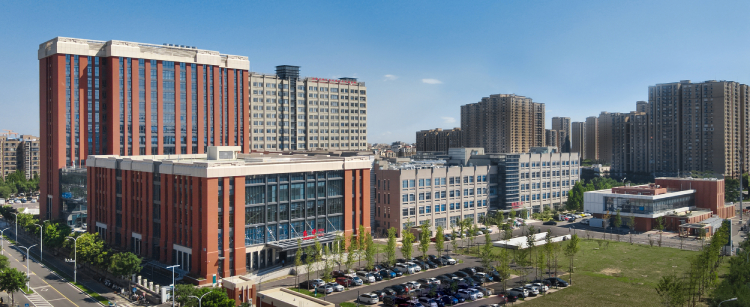
多年来,北京友谊医院党委坚持以习近平新时代中国特色社会主义思想为指导,带领全院干部职工在落实非首都功能疏解和京津冀协同发展、推进医疗改革、创新驱动发展、提升医疗质量、改善医疗服务等方面,大胆改革,锐意进取,扎实工作,整体社会评价在全市及全国医院中名列前茅,在国家三级公立医院绩效考核中位列A+等级。医院曾先后两次被评为全国先进基层党组织,荣获全国脱贫攻坚先进集体、全国“三八”红旗集体、全国工人先锋号、全国模范职工之家、中国质量奖提名奖、首都劳动奖章、北京市抗击新冠肺炎疫情先进集体、冬奥会冬残奥会北京市先进集体等荣誉,多次被授予首都文明单位标兵等光荣称号。2021年8月,世界著名麻风病防治专家李桓英教授被中宣部授予“时代楷模”称号。2023年10月,中国工程院院士、中国第24批援几内亚医疗队队长王振常被评为“时代楷模中国援外医疗队群体代表”。
建院以来,北京友谊医院得到了党和政府以及社会各界的关怀和支持。在市委市政府、市卫生健康委和市医院管理中心的领导下,医院坚持“全心全意为患者服务”的宗旨,弘扬“仁爱博精”的院训精神,建立现代医院管理制度,坚持党委领导下的院长负责制,以消化学科群为战略学科,整合现有国家临床重点专科项目、传统特色学科、有发展潜能的优势学科,建高原、筑高峰,全面加速学科发展。
面向未来,北京友谊医院将继续坚持以习近平新时代中国特色社会主义思想为指导,全面贯彻落实习近平总书记对北京工作的重要讲话精神和对卫生工作重要指示,发挥“敢担当,善组织,有作为,齐奋斗”的新时代友谊创业精神,立足新时代首都发展,立足健康中国建设,以创新驱动、人才强院、医院高质量发展为发展战略,以患者信任、职工幸福、医院发展、党和政府放心为发展路径,努力建设成为医教研防为一体的综合型现代化医学中心,为新时代首都发展、为人民健康做出新的更大的贡献。
(2026年9月更新)
Hospital Profile
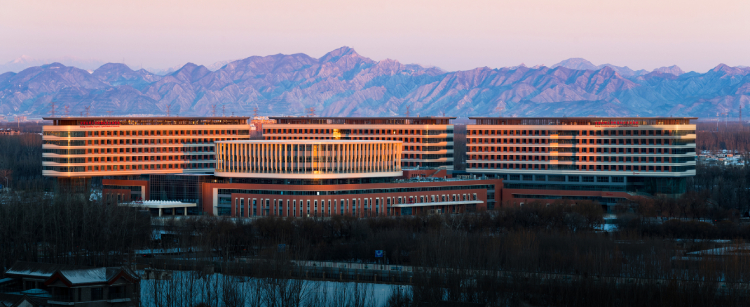
Born with the nation, growing with the city, committed to people, and evolving with the times. After more than 70 years of development, Beijing Friendship Hospital, Capital Medical University, has grown into a leading tertiary Grade A general hospital under the Beijing Municipal Government, integrating medical care, education, scientific research, and disease prevention. The hospital is the host institution of the National Clinical Research Center for Digestive Diseases and the National Key Laboratory for Digestive Health, and is also one of the pilot institutions for the national “Flagship Hospital” initiative for integrated traditional Chinese and Western medicine. It serves as the Second Clinical Medical School of Capital Medical University. Entering a new era, the hospital has actively responded to the evolving needs of Beijing’s development. Guided by the city’s strategic positioning as the national political, cultural, international exchange, and scientific and technological innovation center, and aligned with the Beijing Urban Master Plan, the hospital has contributed to the relocation of non-capital functions and established a multi-campus development structure comprising the Xicheng Campus, Tongzhou Campus, Shunyi Campus, and the Outpatient Department at the Administrative Office Area of Beijing’s Sub-Center. This new structure has laid a solid foundation for the hospital’s high-quality development.
The hospital has more than 6,300 employees, including one academician of the Chinese Academy of Engineering, three Beijing scholars, 256 postgraduate supervisors, and 919 senior-level medical and technical professionals. A total of 95 staff members serve as chairs, vice chairs, or core members of national- and municipal-level professional committees, or as editors-in-chief or deputy editors-in-chief of leading academic journals. Across its three campuses, the hospital has 3,306 authorized beds. In 2025, it recorded nearly 4.5 million outpatient visits and 150,000 inpatient discharges. Beijing Friendship Hospital is one of the first Class A designated medical institutions in Beijing under the basic medical insurance system. It provides direct settlement services for patients covered by medical insurance from outside Beijing for both outpatient and inpatient care. The hospital is also one of the earliest medical institutions in China to undertake healthcare services for senior government officials and medical services for foreign guests.
The hospital has distinctive comprehensive strengths and well-established specialty disciplines, with 50 clinical, medical technology, and platform departments. Its areas of particular expertise include the diagnosis and treatment of digestive and urinary system diseases, liver and kidney transplantation, the diagnosis and treatment of tropical and parasitic diseases, integrated traditional Chinese and Western medicine, as well as clinical imaging diagnosis and interventional treatment. In December 2018, Beijing Friendship Hospital was selected as one of the first hospitals in China to participate in the national pilot program for establishing a modern hospital management system. Through continuous development, the hospital has gradually established a modern hospital governance and management system characterized by clearly defined responsibilities and authorities, scientific management, sound governance, efficient operations, and effective oversight, reflecting the distinctive characteristics of Beijing Friendship Hospital.
In recent years, the hospital has significantly enhanced its capacity for medical science and technology innovation, continuously refined its disciplinary structure, strengthened its supporting platforms, and further consolidated its comprehensive strengths. It hosts five research institutes—the Beijing Institute of Tropical Medicine, the Beijing Institute of Clinical Medicine, the Beijing Institute of Clinical Pharmacy, the Beijing Institute of Integrated Traditional Chinese and Western Medicine, and the Institute of Urology of the Beijing Municipal Health Commission. The hospital has 12 national key clinical specialties, 27 doctoral degree programs, 33 master's degree programs, 17 national standardized residency training bases, 4 national pilot subspecialty training bases, 1 national key laboratory, 6 Beijing keylaboratories, 1 Beijing “Belt and Road” joint laboratory, 5 Beijing clinical quality control centers, and 3provincial/ministerial-level translational platforms. It also operates the first batch of Beijing model research wards, the Beijing Clinical Research Promotion Center, an ISO9001-certified biobank, and amulti-center mutually recognized medical ethics platform. The hospital has established the AcademicianWang Zhenchang Laboratory for Precision and Intelligent Imaging, focusing on intelligent perception,precise interpretation, and integrated application of medical imaging, and has achieved significant resultsin multimodal dataset development, AI model research, molecular imaging exploration, and imagingquality control. The hospital maintains long-standing academic exchange and collaboration with leadingmedical schools both in China and overseas, and hosts domestic and international experts, scholars, andinternational students for short-term exchanges, visits, and clinical observerships.

 京公网安备11010202008305号